
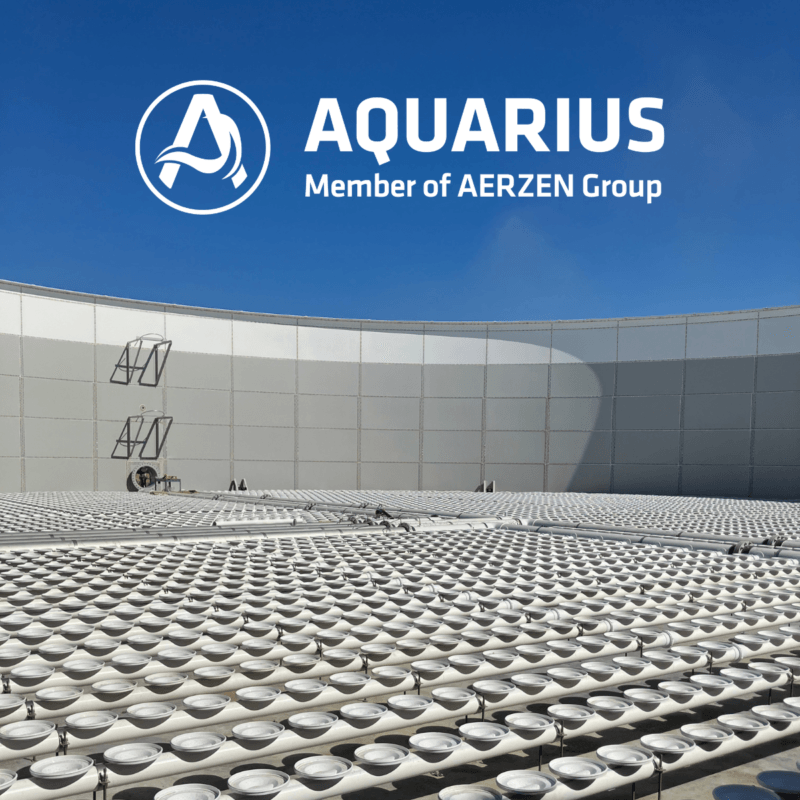
In any wastewater treatment plant, the aeration system is the true engine behind effective biological treatment. It powers the reactions that remove organic pollutants and nutrients, supporting the microorganisms that transform wastewater into clean, reusable water. But more than just another piece of equipment, aeration systems directly impact a plant’s energy consumption, operational efficiency, and long-term maintenance costs.
Keep reading to learn why aeration is essential, the key goals it must achieve, and the challenges that make proper system design and management crucial.
The Role and Goals of Aeration in Wastewater Treatment
It is no secret that approximately 50% of a wastewater facility’s energy costs are from diffused aeration systems. At its core, an aeration system’s mission is straightforward: to deliver oxygen from the blowers into the biological reactors where microorganisms do their work while minimizing energy. These microorganisms rely on oxygen to perform essential treatment processes such as:
- Biochemical Oxygen Demand (BOD) oxidation – Breaking down organic matter.
- Nitrification – Converting ammonia into nitrate.
- Biological Phosphorus Uptake – Removing phosphorus through microbial activity.
Key Objectives for Effective Aeration
A well-designed aeration system must:
- Transfer oxygen efficiently to meet treatment performance and effluent limits.
- Provide adequate mixing to keep solids suspended and ensure uniform contact between air, water, and biological solids.
- Support microbial growth, maintaining enough biomass to sustain biological reactions.
- Minimize energy use while achieving required levels of BOD, TN, and TP removal.
- Reduce operation and maintenance (O&M) costs over the system’s life.
When these objectives are balanced effectively, the result is stable, efficient treatment at the lowest possible energy cost—a goal that every plant strives for.
The Energy Equation: Why Efficiency Matters
Aeration is not just important—it’s expensive. Studies (Rosso & Stenstrom, 2005) show that aeration accounts for 45–75% of total plant energy consumption, excluding influent and effluent pumping. That makes it one of the largest single contributors to a facility’s operational budget.
Minimizing energy use in aeration is therefore critical. Even small improvements in efficiency—through better diffuser selection, cleaning schedules, or intelligent control systems—translate into significant long-term savings. Over time, an optimized aeration strategy can reduce power consumption while maintaining compliance with increasingly strict environmental regulations.
Common Challenges in Aeration Systems
Despite its importance, aeration comes with several challenges that must be carefully managed to sustain performance.
1. Diffuser Fouling and Clogging
Over years of operation, diffusers are prone to fouling and clogging from organic buildup, biofilm, or mineral scaling. When fouling occurs, oxygen transfer efficiency decreases, coalescing of bubbles occurs, and system backpressure rises. The blowers then consume more power to deliver the same airflow, driving up energy costs and potentially compromising treatment results.
Regular maintenance, including chemical or physical cleaning and real-time monitoring, is essential to keep diffusers operating at peak performance.
2. Excessive Operation and Maintenance (O&M)
Aeration maintenance can be labor-intensive and pose safety and financial risks if not properly managed. Tasks like draining tanks, replacing membranes, cleaning grids, and handling wastewater add up to significant cost over a system’s lifecycle.
Poorly designed diffuser systems may require frequent tank entries or complex replacement procedures, further increasing both downtime and labor costs. Choosing reliable, accessible equipment reduces these burdens dramatically.
3. Diffuser Integrity and System Reliability
Wastewater is a harsh, corrosive environment. Over time, diffusers can degrade, tear, or fail structurally, especially if material quality or design doesn’t match process conditions. When integrity issues arise, the consequences can be serious—reduced aeration capacity, higher blower demand, process instability, and ultimately costly system replacements.
Selecting the right diffuser materials and configurations—whether membrane, ceramic, or stainless steel—is essential to maintaining long-term system integrity and meeting treatment goals.
Designing for Performance and Longevity
To maximize the effectiveness of an aeration system, utilities and operators should take a system-level approach—focusing not only on the diffusers themselves but on the entire oxygen delivery process.
Best Practices: Designing for Performance and Longevity
Best practices include:
- Matching diffusers to the application and duty cycle–ceramic for continuous air systems, membranes for variable loading.
- Implementing proactive maintenance through data monitoring of airflow, pressure, and dissolved oxygen (DO) levels.
- Designing for access and safety, such as retrievable diffuser grids or partitioned basins to allow work without halting operations.
- Integrating energy-efficient controls like variable frequency drives (VFDs) and automatic DO control loops.
A thoughtful design doesn’t just reduce costs—it ensures resilient, dependable treatment over decades of service.
Conclusion: Powering Environmental Protection
Aeration is the heart of biological wastewater treatment—and one of the most significant influences on a facility’s overall performance and cost. Its purpose goes beyond adding air bubbles to water; it creates the conditions in which life-based treatment can thrive.
By understanding core aeration goals, addressing challenges like fouling and integrity, and prioritizing energy efficiency, wastewater professionals can transform their plants into more sustainable, lower-cost operations.
At the end of the day, a smartly designed and well-maintained aeration system doesn’t just treat wastewater—it powers environmental protection and operational excellence for the long run.
